
Recurring crack decisions
Investigate repeat cracks before patching again
A homeowner guide to documenting recurring stucco cracks near windows and doors, separating symptoms from sources, and comparing repair scopes.
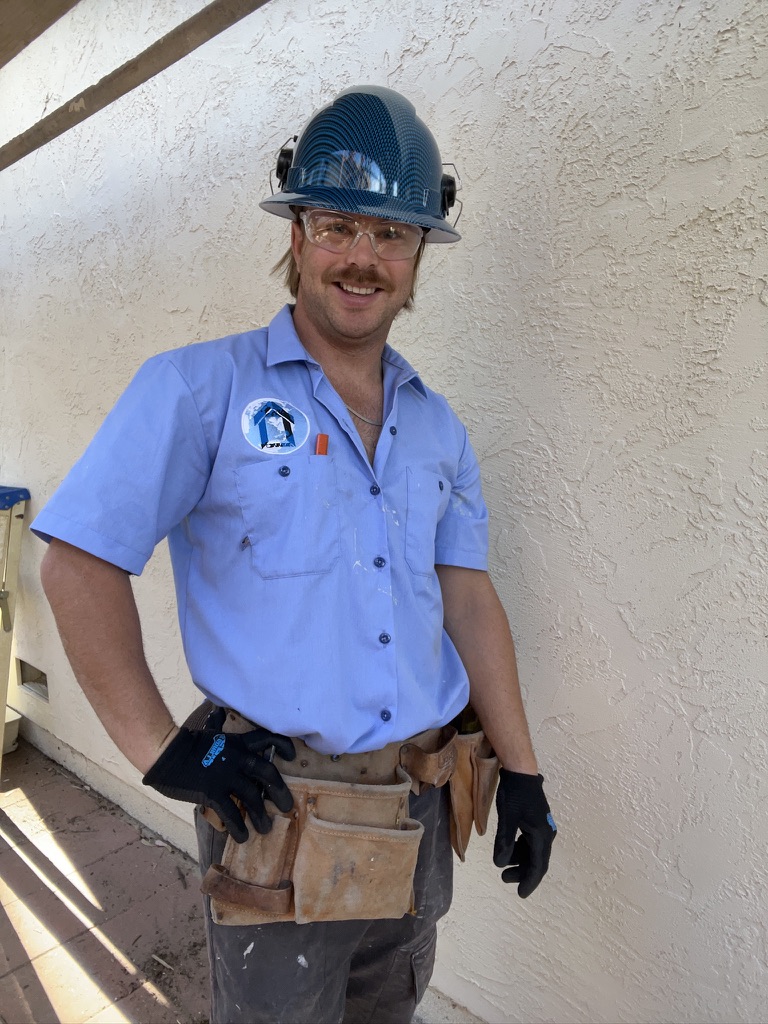
From All World Construction LLC
Owner: Austin Mitchell About Verify CSLB #1063936 Updated
A crack that returns near a window or door is a history, not just a line in the finish. Previous filler may have addressed appearance while movement, an opening transition, adjacent work, moisture, or another condition remained unresolved. The owner’s first decision is whether to buy another cosmetic patch or pay for enough investigation to define a defensible repair boundary.
Build a useful crack history
Collect dated photos taken from similar positions and note when the crack was first seen, previous repair dates, rain or interior symptoms, and nearby window or door work. Record whether operation of the opening changed, but do not force or dismantle it. This history helps a contractor distinguish a stable old mark from an active complaint.
Avoid diagnosing the cause from crack direction alone. Similar-looking cracks can have different sources, and photographs cannot confirm concealed layers. A field review should connect visible conditions, repair history, and the surrounding assembly before a scope is chosen.
Inspect the whole opening relationship
A useful evaluation looks beyond the crack to corners, trim, joints, sealant, nearby penetrations, staining, previous patches, wall transitions, and accessible interior signs. Window or door installation details and flashing responsibility are verified scope questions for the actual assembly, not assumptions based on the building address.
If the source appears to involve the opening, the responsible window or door trade may need to participate before stucco closure. If structural movement is suspected, the appropriate qualified professional may be needed. The contractor should state the limits of the evaluation rather than present visual clues as certainty.
Compare three levels of response
A monitoring plan documents the crack and sets a review point. A cosmetic repair prepares and refinishes the visible area while clearly excluding an unverified source. A more complete repair opens an agreed area to assess accessible concealed conditions and rebuild the affected finish. These choices carry different costs and confidence.
The proposal should explain which level it offers, what could trigger added work, and who approves it. A broad phrase such as “repair cracks” is not enough when the same location has already failed.
Set finish expectations before opening the wall
Crack repair width may grow when loose material or an unsuccessful prior patch is removed. Texture and paint boundaries should allow for that possibility. Ask whether the finish price covers only the opened strip or reaches a natural stopping point.
No repair can responsibly guarantee that every crack will never recur. A good contractor explains preparation, repair limits, observed conditions, and exclusions. The owner can then weigh the value of source investigation against a knowingly limited cosmetic response.
Use documentation to approve the next step
Request photos before work, after preparation, of accessible concealed conditions, and after finish. Keep the written approval for changes with the property record. This is especially useful when an owner, manager, tenant, and multiple trades share decisions.
AWC, CSLB 1063936, provides repair planning through a licensed general-contractor scope. For exterior, water-related, elevated, or multi-trade uncertainty, AWC recommends the $250 Site Evaluation + Written Bid Package. The $250 is credited back when the quoted work is approved within 30 days. Call 619-327-9513 or visit allworldconstructions.com with the crack history and prior repair information.
Planning checklist
- Dated photos and prior repair history are assembled.
- The surrounding opening, joints, stains, and transitions are reviewed.
- Monitoring, cosmetic repair, and investigation are clearly distinguished.
- Change approval and concealed-condition limits are written.
- Texture, paint, documentation, and exclusions are included.
Questions owners ask
Does a diagonal crack prove a structural problem?
No. Shape alone is not a diagnosis. Review the history and surrounding conditions, and involve the appropriate qualified professional if structural movement is suspected.
Is filling the crack enough?
It may be an intentionally limited cosmetic choice, but it does not establish or correct an unknown source. The proposal should say which result it is selling.
Can a contractor guarantee the crack will never return?
Conditions and movement can change. Compare the documented preparation, investigated source, scope limits, and finish plan instead of relying on an absolute promise.
AWC source library
Related field guidance
AWC article
Stucco Crack? Why the Finish May Not Be the Source
Separate the visible crack from unverified movement, moisture and adjoining-component conditions.
AWC article
Patch, Recoat, or Restucco? How to Choose a Repair Scope
Compare removal, wall layers and finish boundaries before choosing a repair label.