
Documented AWC company work
Repairing the stucco did not mean repainting the wall.
A documented AWC repair below a window shows why removal limits, texture work and painting need separate written boundaries.
From All World Construction LLC
Owner: Austin Mitchell About Verify CSLB #1063936 Updated
Project-library example. This page does not claim the work occurred in Mission Hills or that final paint is shown.
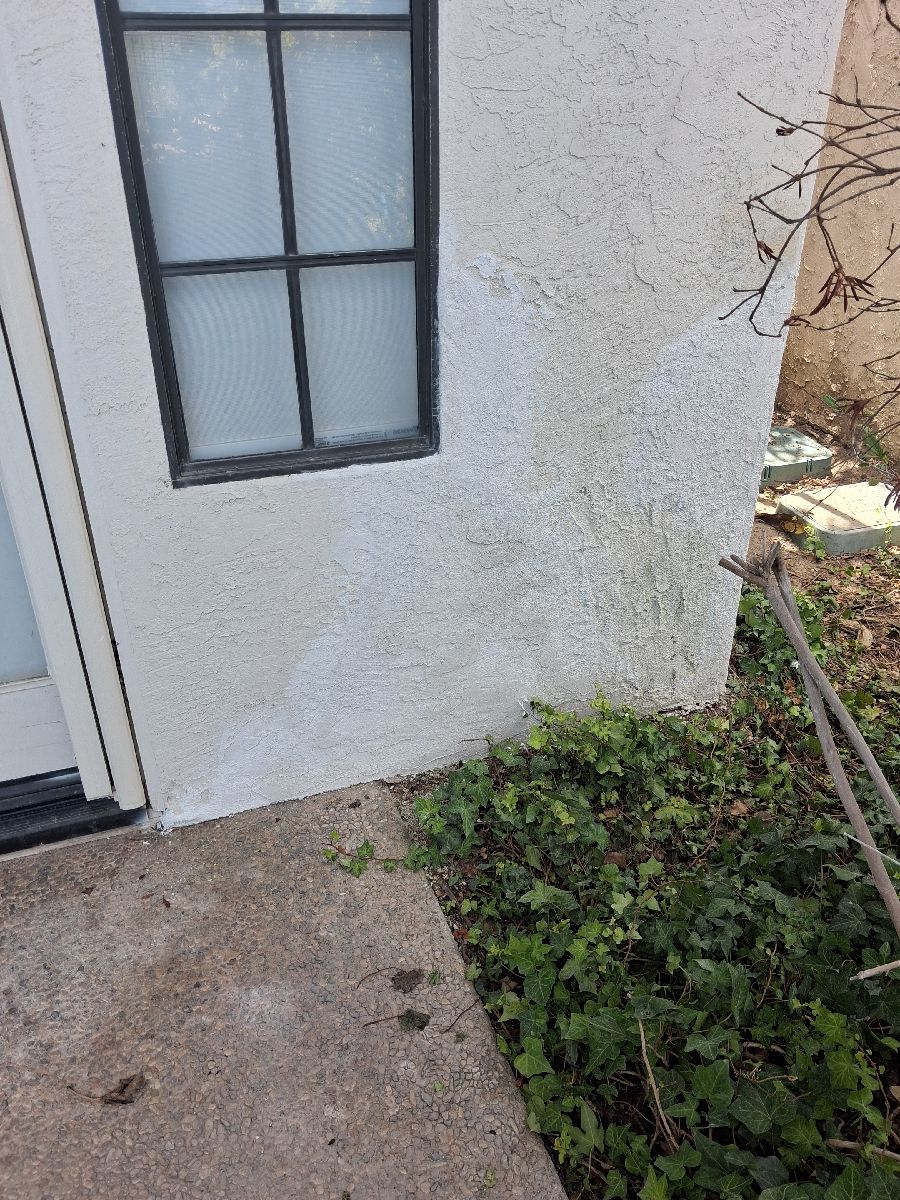
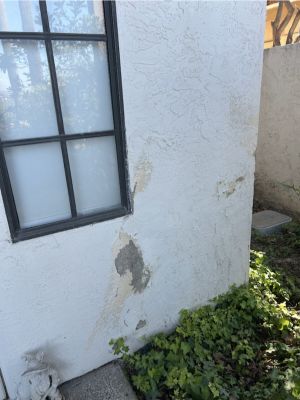
The damaged area sat below an exterior window. AWC’s work record describes a localized stucco repair: remove loose material to sound edges, prepare the exposed area, restore the patch and match the existing texture as closely as practical. The owner’s photo and a later work-stage photo show the same window area. They are useful evidence of the repair boundary; they do not establish what caused the damage.
Start with the whole opening, then define the repair area
A close view makes the missing stucco obvious. The wider view adds the window, door edge, wall return and nearby ground. That context helps an owner describe the area and helps a contractor identify what must be reviewed. It does not turn the window itself into a confirmed source of damage.
For this documented work, the written limits followed the primary areas identified in customer photos and confirmed during the site visit. The job also included other localized repair areas. This case concentrates on the window area shown in the matched photo pair.
Removal follows sound material, not a guessed rectangle
The completion record states that loose and delaminated stucco was removed back to firmly bonded material and that exposed surfaces were cleaned and prepared before patching. It also records compatible repair material and practical texture matching. Those are the supported steps.
The photographs do not show every concealed layer. They cannot establish the condition of framing, sheathing, lath, weather-resistive layers or window flashing. A similar proposal should explain the initial removal boundary and how a changed condition will be photographed, discussed and approved before work expands.
Keep texture, primer and paint as separate decisions
The record explicitly excluded painting, primer and color matching. That matters when looking at the later photograph: a visible patch or color difference is not evidence that an included paint scope was left unfinished. The agreed work ended at the stated stucco repair stage.
When appearance across a full wall matters, ask for the texture area and coating boundary to be stated separately. A localized repair, a full wall repaint and a broader finish scope can produce different results. Existing texture, coatings, weathering and viewing light should be part of the conversation before approval.
A completed surface does not settle the source question
The project record kept sprinkler adjustments and preventing repeated moisture exposure outside the stucco repair. It did not assign a root cause for the deterioration. This case therefore makes no claim that stucco patching corrected a leak, drainage problem or window installation.
For a different property with repeated staining, active moisture or an unclear opening detail, AWC should first identify the party responsible for source review and any related trade work. The written scope can then distinguish that work from restoring the visible wall. Closing the finish should not hide an unresolved handoff.
What to ask for on a similar repair
Send safe ground-level views of the whole wall, close views of the damaged area and a short history of prior repairs or rain-related changes. Identify the adjoining component and any work already performed by another trade. Do not remove material or climb to collect evidence.
Before approving, confirm which wall areas and layers are included, who handles adjoining work, where texture and paint stop, what remains unknown and who may approve a change. AWC may recommend the $250 Site Evaluation + Written Bid Package when exterior conditions need field verification. The fee is credited back if the quoted work is approved within 30 days.